
What Historic Immigration and Naturalization Papers Reveal About Your Family
Passenger manifests, declarations of intent, and naturalization certificates carry rich family detail. Learn how to find and interpret them.
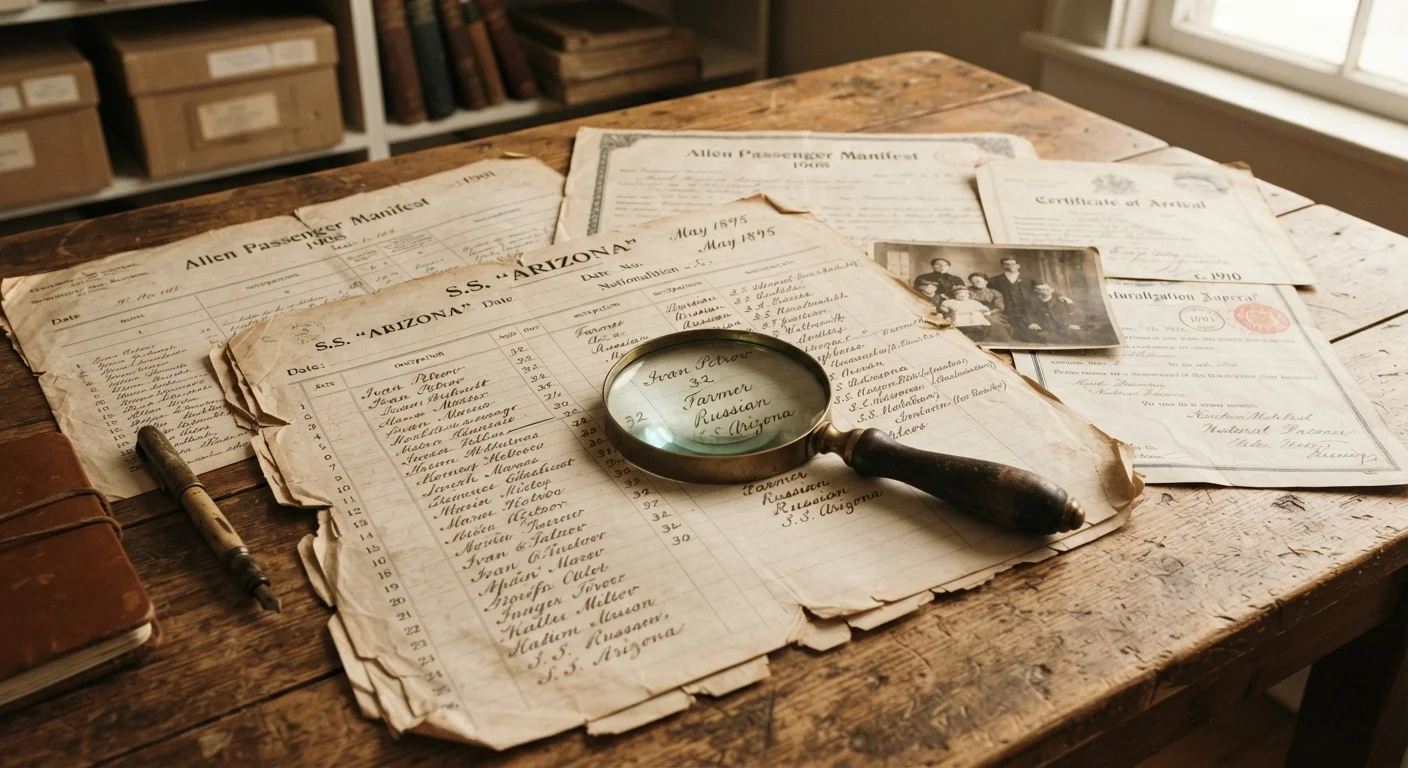
Photo: searchopenrecords editorial
—— In This Article
Key Takeaways
- Passenger manifests from 1891 onward often recorded birthplace, physical description, destination contact, and nearest relative abroad.
- Declarations of intent and naturalization petitions can reveal the exact town or village your ancestor emigrated from.
- Records before 1906 were kept by local courts, making their location less predictable than later federal records.
- Name spelling variations are common — searching by phonetic sound or country of origin broadens your results.
- Many immigration and naturalization records are freely searchable through the National Archives and partner genealogical databases.
Why These Documents Are Unlike Any Other Family Record
No single category of public record captures a moment of personal transformation quite like immigration and naturalization papers. A census tells you where your ancestor lived; a death certificate tells you when they died. But an immigration file tells you who they were before they became American — the village they left, the relative waiting for them at home, the ship that carried them, and the exact moment they pledged allegiance to a new country.
These records sit at the intersection of personal biography and national history. For families whose origins trace to the mass migration waves of the late 19th and early 20th centuries, they are often the only documentary bridge to the homeland. Understanding what each record type contains — and how to find it — is one of the most valuable skills in genealogical research. See our broader guide on tracing immigrant ancestors through ports and passenger lists for context on the overall landscape.
Passenger Manifests: The Arrival Record in Detail
When a ship docked at an American port, immigration inspectors reviewed a manifest — a list prepared before departure. The information collected expanded dramatically in 1891 and again in 1906, so the era of arrival matters greatly for what you will find.
- Pre-1891 manifests record little more than name, age, sex, and occupation.
- 1891–1906 manifests add marital status, last residence, destination, and whether the passenger was joining a relative — plus that relative's name and address.
- Post-1906 manifests include physical descriptions (height, hair color, identifying marks), whether the passenger had been to the U.S. before, and the name and address of the nearest relative in the country of origin.
That last detail — a relative's name and address in the home country — is among the most underused clues in genealogy. It can place your ancestor in a specific town or even a street, giving you a starting point for searching foreign civil or church records.
~29 million
Immigrants arriving through Ellis Island, 1892–1954
According to the Ellis Island Foundation, this port processed the largest wave of immigration in U.S. history, leaving behind an extensive archive of arrival records.
1820
Year federal passenger list collection began
The Steerage Act of 1819 required captains to submit passenger manifests to customs officials, creating a continuous federal record stretching back over 200 years.
Post-1906
Era when standardized naturalization forms began
The Basic Naturalization Act of 1906 created the Bureau of Immigration and Naturalization, introducing uniform federal forms that contain significantly more biographical detail.
For a complementary approach using census data alongside these arrival records, see how to trace your lineage through census records.
Declarations of Intent and Naturalization Petitions
Naturalization was a two-step process for most of U.S. history. An immigrant first filed a declaration of intent (renouncing foreign allegiance), then — after a waiting period — submitted a petition for naturalization. Both documents can be rich with genealogical data.
Before September 27, 1906, naturalization was handled entirely by local courts, which means records may be scattered across county courthouses, state archives, or even federal district courts depending on where your ancestor lived. After that date, the newly created Bureau of Immigration and Naturalization introduced standardized forms collected at the federal level, making post-1906 records far more consistent and easier to locate.
A post-1906 petition typically includes the applicant's full name, age, occupation, personal description, country of birth, date and port of arrival, name of the vessel, and the names and birthplaces of spouse and children. For many researchers, this single document can resolve questions that years of searching failed to answer.
Start With What You Already Know
Before searching immigration records, gather every family document you can — old letters, family bibles, passport photos, or naturalization certificates your relatives may have kept. The exact spelling of a name, a ship name, or a year of arrival on a family document can save hours of searching and dramatically narrow your results in archival databases.
The full paper trail of immigration and naturalization records article walks through how to read and interpret each document type in detail.
Finding and Accessing the Records
Most federal immigration and naturalization records are held by the National Archives and Records Administration (NARA). Passenger arrival lists through 1957 are generally open to the public, with many digitized and available through NARA's online catalog or through partner projects at FamilySearch. Naturalization records are similarly accessible, though records created after 1906 may require a formal request.
Key access points include:
- NARA online catalog (archives.gov) — Search by record group; many manifests and indexes are freely downloadable.
- FamilySearch.org — A free, volunteer-indexed database with extensive passenger list and naturalization collections.
- State and county archives — Essential for pre-1906 court-based naturalizations, which were never centralized.
- USCIS Genealogy Program — For records created after 1906, submit Form G-1041 to request copies of historical files for deceased individuals.
When searching, anticipate name variation. Phonetic spellings, anglicized first names, and clerical transcription errors are all common. Try searching by approximate birth year and country rather than exact name if initial searches come up empty. Obituaries for immigrant relatives can sometimes bridge the gap — learn what they can and cannot reveal in our guide on using obituaries to research immigrant ancestors.
For a broader overview of all public record types available for family research, see where your family history is already documented.
Frequently Asked Questions

Genealogy Search Editorial Team
Genealogy Search Editorial Team is the collective byline for our editorial team and contributor network. Articles published under this byline or an editorial pen name are researched, written, and reviewed according to our editorial standards for clarity, consistency, and independence before publication.
View author profile