
Tracing Your Lineage Through Census Records
Census records are among the richest genealogy sources available. Here's how to locate them, read them accurately, and avoid common pitfalls.
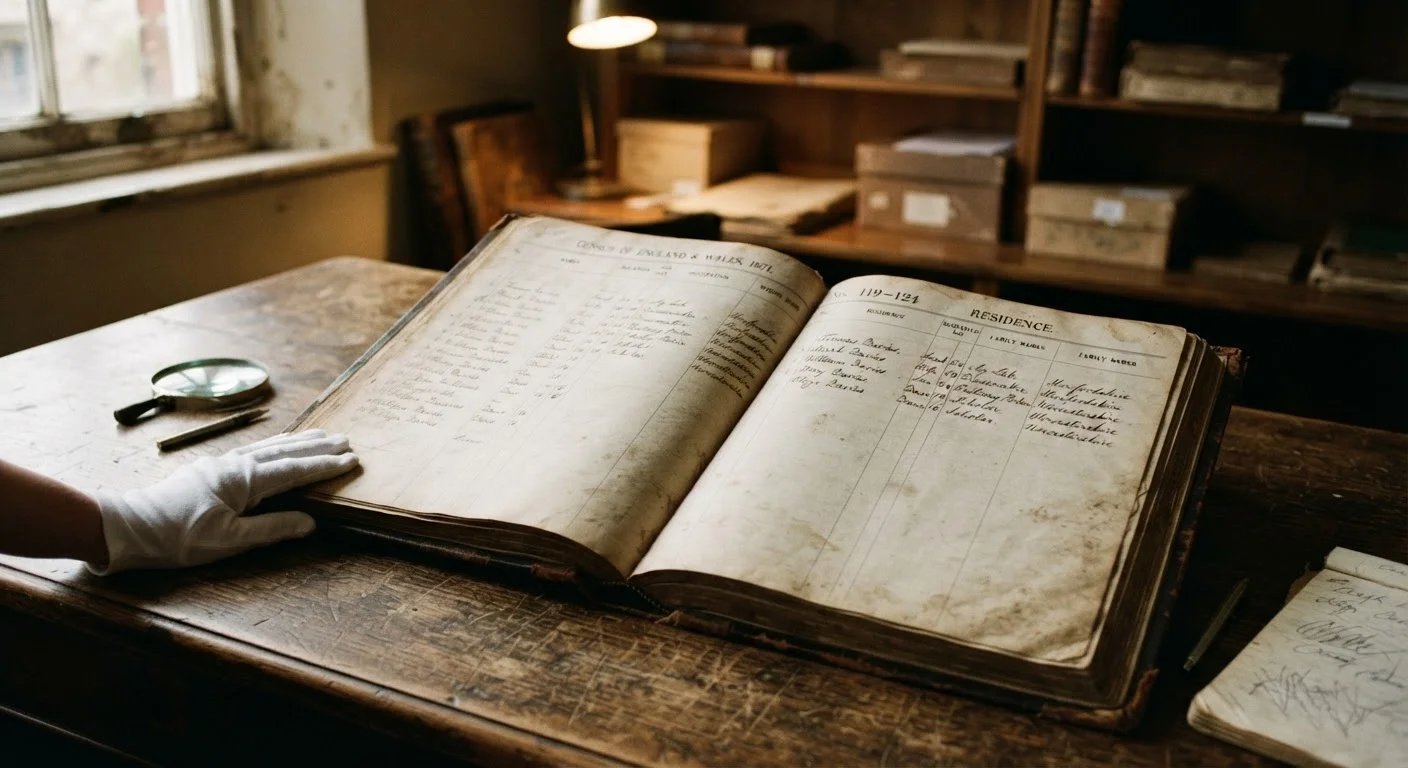
Photo: searchopenrecords editorial
—— In This Article
Key Takeaways
- U.S. federal census records from 1790 to 1950 are publicly available and searchable online.
- Each census decade captured different data fields — knowing which to expect prevents misreading entries.
- Name spelling variations and enumerator errors are common; always search phonetically as well as exactly.
- Linking census years together reveals household changes, migrations, and family structure across decades.
- Census data should always be cross-referenced with vital records, land records, and other documents.
Why Census Records Are Central to Genealogy Research
Among all public documents, the U.S. federal census stands apart for its breadth. Every ten years, enumerators visited households across the country and recorded names, ages, relationships, birthplaces, and occupations. For genealogists, that rhythm creates a paper trail that can anchor family history across multiple generations in a single record type.
Census records are part of the broader landscape of public records used in family history research, but they are uniquely consistent — conducted on a regular cycle with standardized columns, making comparisons across decades methodical rather than guesswork. Combined with resources like obituaries, which name relatives and places, census data can rapidly extend a family tree backward through time.
To get the most from census research, it helps to understand what each era recorded. The columns changed significantly between 1790 and 1950 — early schedules listed only the head of household, while later ones named every individual and added detail like immigration year and language spoken. See Census Records Through the Decades for a breakdown of what each census period captures.
What You Need Before You Start
Effective census research begins with what you already know. Gather names, approximate birth years, and last known locations for the ancestor you want to trace. Even rough information narrows your search significantly.
What you will need
If you are new to working backward from known relatives, the approach outlined in Tracing a Family Line From Living Relatives Back Through Generations will help you establish a starting point before you open any census database.
Step-by-Step: Finding and Reading Census Records
Follow the steps below to locate relevant census entries, interpret what they contain, and connect findings across multiple census years.
Identify the census years relevant to your ancestor
Start by calculating which census years fall within your ancestor's likely adult life. If your great-grandmother was born around 1878, she would appear as a child in the 1880 census, as a young adult in 1900, and as a head of household or spouse in 1910 through 1940. List every decade from birth to death as a potential target.
Choose a reliable access point for census images
Digitized census records are available through the National Archives (catalog.archives.gov) at no cost, and through major genealogy databases that have indexed and imaged the same records. Free access is also available at many public libraries and Family History Centers operated by the Church of Jesus Christ of Latter-day Saints. Whichever platform you use, aim to view the actual census image — not just the index — because transcription errors in indexes are common.
Run both exact and wildcard name searches
Enter the ancestor's surname and given name in the search fields, then run the search. If results are sparse or absent, try wildcard characters (usually an asterisk) to capture spelling variants — for example, Sch*fer will return both Schafer and Schaefer. Also try searching by first name plus birth year and state only, omitting the surname entirely.
Read the full household entry, not just your ancestor's line
Once you locate a matching entry, read every person listed in the household. Census records group individuals by dwelling, so you may find siblings, in-laws, boarders, or aging parents living under the same roof. Note everyone's name, age, relationship to head of household, birthplace, and parents' birthplaces — each detail is a potential lead for further research.
Link findings across multiple census years
Place each census finding on a timeline. Compare ages across decades (they should increase by roughly ten years), note changes in household composition, and track geographic moves. A family appearing in Ohio in 1900 and Kansas in 1910 suggests a migration worth investigating. Gaps — an ancestor absent from one census — may indicate a year spent elsewhere, a recording error, or a name change through marriage.
Document and cite each record you find
Record the full citation for every census entry you use: census year, state, county, enumeration district, sheet number, and the name of the database or archive where you viewed the image. Proper citation allows you to return to the source, share findings with other researchers, and distinguish confirmed facts from inferences. A simple spreadsheet or genealogy software file works well for this purpose.
The 72-Year Privacy Rule
Federal law restricts public access to individual census records for 72 years after each census is taken. The 1950 census became available in 2022; the 1960 census will not open until 2032. Records for living individuals are not accessible to the public, which means recent censuses cannot be used for genealogical research.
Avoiding Common Misreadings and Dead Ends
Census records are rich but imperfect. Enumerators recorded what they heard — often phonetically, in a second language, or under time pressure — which means names are frequently misspelled, ages are rounded or wrong, and birthplaces are vague. A researcher looking only for exact name matches will miss a large share of available records.
When a search comes up empty, try phonetic search options (many databases offer Soundex filtering), search by other household members' names, or broaden the geographic filter. Also check whether the ancestor may have been enumerated in a neighboring county if they lived near a county line.
Census data should never stand alone. Cross-reference every finding with vital records, land and property records, immigration papers, and other documents. For ancestors who immigrated, naturalization and passenger records often clarify the foreign birthplace listed vaguely in census columns. And to understand which public record types work best together, consult The Public Records That Matter Most in Genealogy Research.

Genealogy Search Editorial Team
Genealogy Search Editorial Team is the collective byline for our editorial team and contributor network. Articles published under this byline or an editorial pen name are researched, written, and reviewed according to our editorial standards for clarity, consistency, and independence before publication.
View author profile