
Census Records vs. Vital Records: Which Should You Start With?
Both census and vital records are genealogy staples — but they serve different purposes. Learn which to consult first based on your research goals.
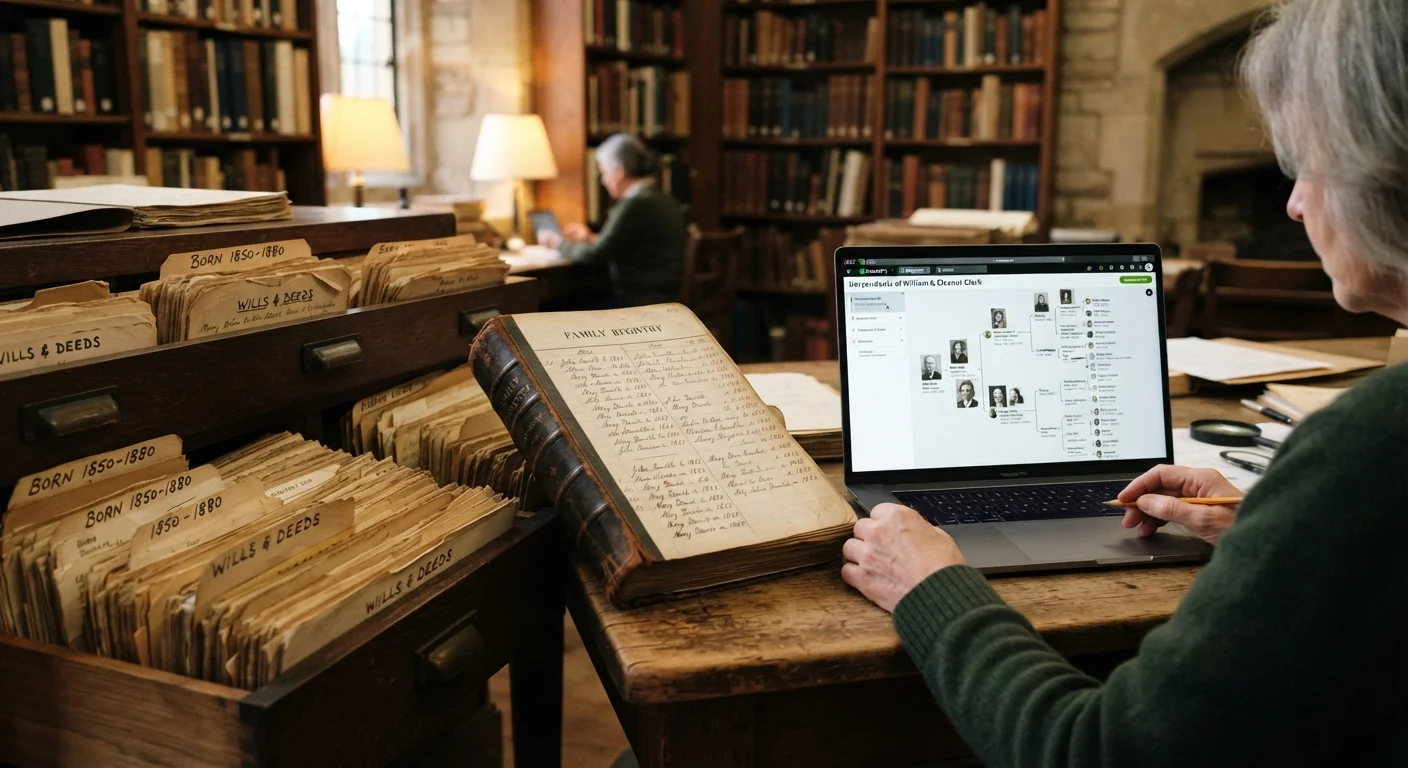
Photo: searchopenrecords editorial
—— In This Article
Key Takeaways
- Census records place ancestors in households at a specific decade, giving you a starting map for further research.
- Vital records — birth, marriage, and death certificates — confirm exact life events and legal relationships.
- Beginners often benefit from starting with census records to build context before seeking vital records.
- Vital records vary significantly by state and era; systematic civil registration in the U.S. began mostly in the late 1800s.
- The two record types work best together: census data guides you to vital records, and vital records verify census findings.
What Each Record Type Actually Contains
Understanding what you are looking at is the first step. Census records are population snapshots collected by the federal government every ten years. Each entry lists household members by name, along with details such as age, sex, birthplace, occupation, and relationship to the head of household — though the specific fields changed with each census decade. For a deep look at how those fields evolved, see Census Records Through the Decades.
Vital records, by contrast, document a single life event: a birth, a marriage, or a death. A birth certificate typically lists the child's full name, date and place of birth, and both parents' names — sometimes including the mother's maiden name and parents' birthplaces. Death certificates add cause of death and the informant's name. Marriage records confirm the legal union and often include ages and witnesses. For a full breakdown of what each document contains, Birth, Marriage, and Death Records is a practical reference.
| Criterion | Census Records | Vital Records |
|---|---|---|
| Primary purpose | Household snapshot every 10 years | Document a single life event |
| Typical information | Name, age, birthplace, occupation, household members | Exact date/place, parents' names, legal relationships |
| U.S. availability | 1790–1950 (1890 largely destroyed) | Varies by state; mostly post-1870s to present |
| Legal authority | Administrative — not a legal proof of identity | Official legal document; certified copies accepted by courts |
| Best starting point when... | Location and family structure are unknown | A specific event date or parentage needs confirmation |
| Free public access | Many digitized and free via FamilySearch and NARA | Older records often free; recent records require fees/requests |
Coverage Gaps You Need to Know
Neither record type covers every ancestor in every era. Civil registration of births and deaths was not uniform across U.S. states until the early twentieth century; the federal government did not achieve near-complete national coverage until around 1933. Before that window, many births and deaths went entirely unregistered with government authorities — a significant gap for anyone tracing ancestors back to the 1800s.
Census records have their own gaps: the 1890 federal census was almost entirely destroyed by fire and water damage in 1921, and the 72-year privacy rule means the most recent publicly released full census is from 1950. Names were also recorded phonetically by enumerators, leading to spelling variants that can make searches frustrating. Understanding these limitations is central to building a reliable research strategy, which is why The Public Records That Matter Most in Genealogy Research is worth consulting as you plan your approach.
When official vital records are absent, researchers often turn to church registers, which frequently pre-date civil registration by decades. Vital Records vs. Church Records explains how to navigate both archives in parallel.
1933
Year U.S. vital registration reached near-complete national coverage
The U.S. Census Bureau and National Center for Health Statistics note that all states had joined the federal registration system by 1933, meaning earlier records can be incomplete.
~25%
Estimated portion of 1890 census records that survived
A 1921 Commerce Department fire and subsequent water damage destroyed the vast majority of the 1890 federal census, creating a significant gap for researchers tracing ancestors in that decade.
72 years
Privacy hold on federal census records before public release
Under U.S. law, individual census records are kept confidential for 72 years; the 1950 census became publicly available in April 2022.
A Practical Starting Strategy for Beginners
For most beginners, census records are the logical entry point — and for good reason. A single census entry can confirm that the person you are researching existed, lived in a specific county, and shared a household with people who were likely relatives. That one record can generate a list of names to chase through vital records next.
Once you have placed an ancestor in a census, you know roughly when and where to look for their birth certificate, marriage record, or death certificate. You now have a narrowed search window — a state, a county, and a decade — which dramatically reduces the guesswork involved in requesting or locating vital records through state archives or county courthouses.
Conversely, if you already hold a death certificate for a grandparent, the census becomes a verification and expansion tool: confirm the age and birthplace on the certificate by finding the same individual in an earlier census, then work backward to identify their parents and siblings. The two record types reinforce each other in a loop rather than competing. For a side-by-side look at how to apply each strategically, see Census Records vs. Vital Records: Choosing the Right Source.
Obituaries can also serve as a bridge between the two worlds, naming survivors and sometimes listing birthplaces that guide you toward the right census year and county. The Obituaries & Family History hub offers guidance on integrating these records into a broader research plan.

Genealogy Search Editorial Team
Genealogy Search Editorial Team is the collective byline for our editorial team and contributor network. Articles published under this byline or an editorial pen name are researched, written, and reviewed according to our editorial standards for clarity, consistency, and independence before publication.
View author profile