
Phone Number Spoofing and What It Means for Reverse Lookup Accuracy
Spoofed numbers can make reverse phone lookup results misleading. Learn how caller ID spoofing works and how it affects the data you see.
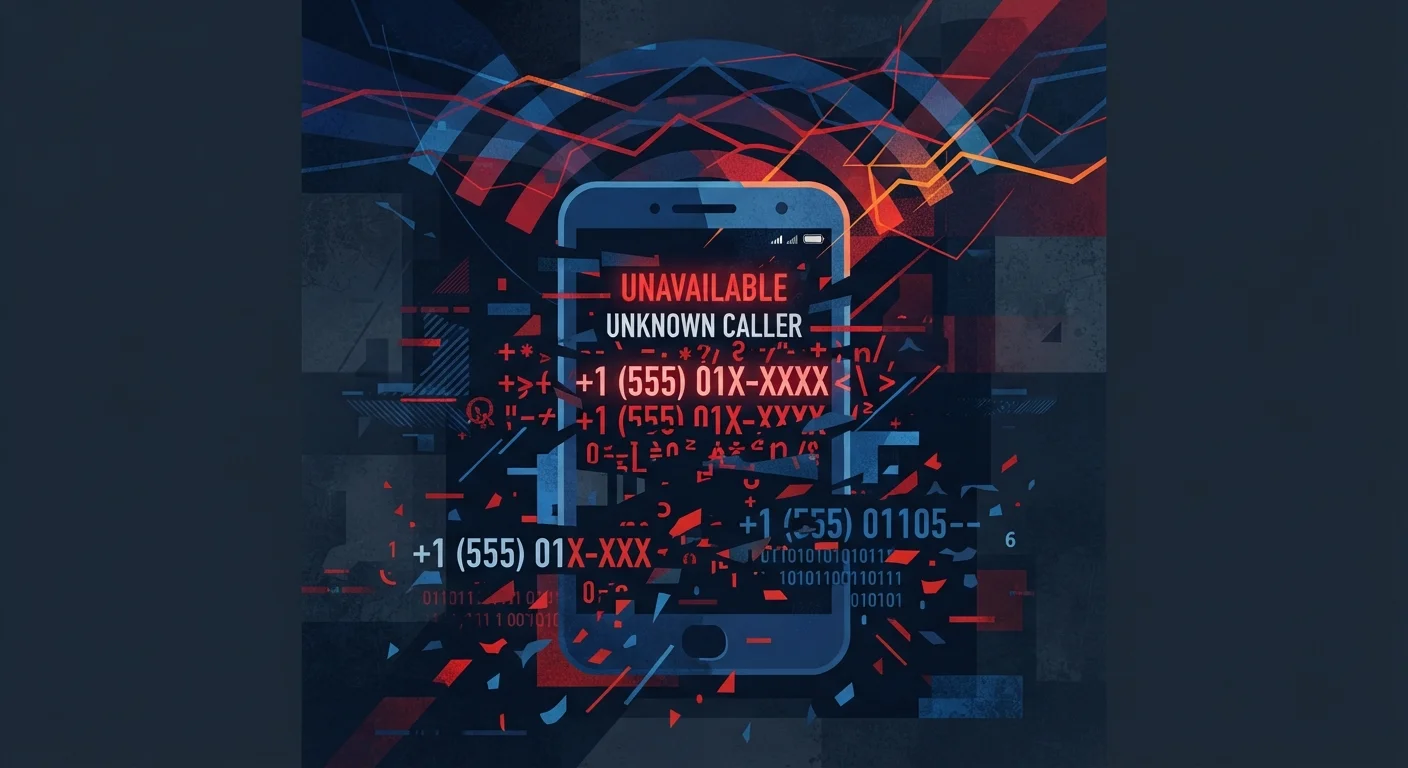
Photo: searchopenrecords editorial
—— In This Article
Key Takeaways
- Spoofed caller IDs display a fake number, not the caller's real one.
- Reverse lookup results reflect the displayed number's owner — not necessarily the actual caller.
- A lookup returning a legitimate business or person does not confirm the call is trustworthy.
- VoIP technology makes spoofing inexpensive and accessible to bad actors at scale.
- Blocking a spoofed number rarely prevents repeat contact because attackers rotate numbers constantly.
How Spoofing Works and Why It Matters
Every phone call carries a small packet of data that tells the recipient's carrier what number to display. Under traditional telephony, this value reflected the actual line placing the call. With the widespread adoption of VoIP and interconnected telecom gateways, that caller ID field can be set to virtually any value before the call enters the network.
For bad actors, this is a low-cost, high-impact tool. A single spoofing service can blast thousands of calls per hour, each presenting a different — and potentially legitimate — local number. The recipient sees a number that may belong to a neighbor, a regional government office, or a well-known retailer. Nothing about the display itself signals danger.
Understanding the mechanics matters because it directly affects how you should interpret reverse lookup results. To learn the foundational principles of how lookup tools draw on public data, see Reverse Phone Lookup Explained.
What a Reverse Lookup Actually Returns on a Spoofed Number
A reverse phone lookup queries carrier records, public databases, and aggregated user-reported data associated with a given number string. When that string is spoofed, the lookup has no way of knowing the displayed number is fake — it simply returns whatever is legitimately associated with those digits.
This creates a specific and underappreciated problem: a lookup result can appear completely clean and credible while the actual call originated from a fraudulent source. You might see the name and city of a real small business or a private individual who has never placed a spam call in their life. The data is accurate about the number — it is just describing the wrong party.
4 billion+
Robocalls placed in the US per month
Industry estimates from call-analytics firms consistently place monthly US robocall volume in the billions, a significant share of which involve spoofed caller IDs.
~30%
Answer rate lift from neighbor spoofing
Studies by call-authentication researchers have found that calls displaying a local area code are meaningfully more likely to be answered than those showing an out-of-area or unknown number.
2019
Year STIR/SHAKEN framework was established
The FCC mandated STIR/SHAKEN implementation for major US carriers beginning in 2021, establishing cryptographic caller ID verification across interconnected networks.
There is also the inverse scenario: a spoofed number may be constructed from digits that aren't assigned to anyone, returning no result at all. Both outcomes — a clean result and an empty result — can indicate spoofing, though neither confirms it. For a broader look at how number type affects lookup reliability, see how landline, mobile, and VoIP numbers behave differently.
Recognizing the Limits Without Abandoning the Tool
Acknowledging spoofing's impact on lookup accuracy doesn't mean reverse lookup is without value — it means understanding what the tool can and cannot confirm. A lookup remains useful for identifying patterns, cross-referencing community-reported spam activity, and establishing whether a number has a documented history of complaints. What it cannot do is authenticate a call's true origin.
Practically, this means treating a reverse lookup result as one data point rather than a verdict. A number returning a legitimate business name warrants skepticism if the call's context doesn't match — an unexpected "bank fraud alert" from a number that looks like your branch should still be verified through an independently sourced contact number. See signals that a phone number may be linked to a scam for additional context patterns worth noting.
It's also worth understanding that spoofing and number recycling are distinct phenomena that can produce similarly confusing results — caller ID spoofing versus number recycling breaks down when each explanation is more likely.
Systemic Responses and What They Mean for Lookup Data
The US telecom industry and regulators have worked to address spoofing at the network level. The STIR/SHAKEN framework requires carriers to cryptographically sign and verify caller ID information as calls pass between networks. When a call is fully attested, carriers can flag it as verified; when attestation is absent or degraded, it may be flagged as unverified or suspicious.
For reverse lookup tools, STIR/SHAKEN attestation data can eventually enrich the signals available — adding a layer beyond static record matching. However, implementation is uneven: calls originating from international carriers or older infrastructure may bypass attestation entirely, leaving significant gaps. Scammers have adapted by routing calls through intermediary carriers with weaker verification requirements.
The practical takeaway is that lookup accuracy on spoofed numbers is improving incrementally, but no system yet eliminates the gap between displayed and true caller identity. For context on why blocking spoofed numbers has inherent limitations, see why blocking a number doesn't always stop the calls.
Frequently Asked Questions

Phone Lookup Editorial Team
Phone Lookup Editorial Team is the collective byline for our editorial team and contributor network. Articles published under this byline or an editorial pen name are researched, written, and reviewed according to our editorial standards for clarity, consistency, and independence before publication.
View author profile