
Total Loss Designations: What Happens After an Insurer Writes Off a Vehicle
When an insurer declares a vehicle a total loss, a chain of public record entries follows. Here's what those entries mean and how to spot them.
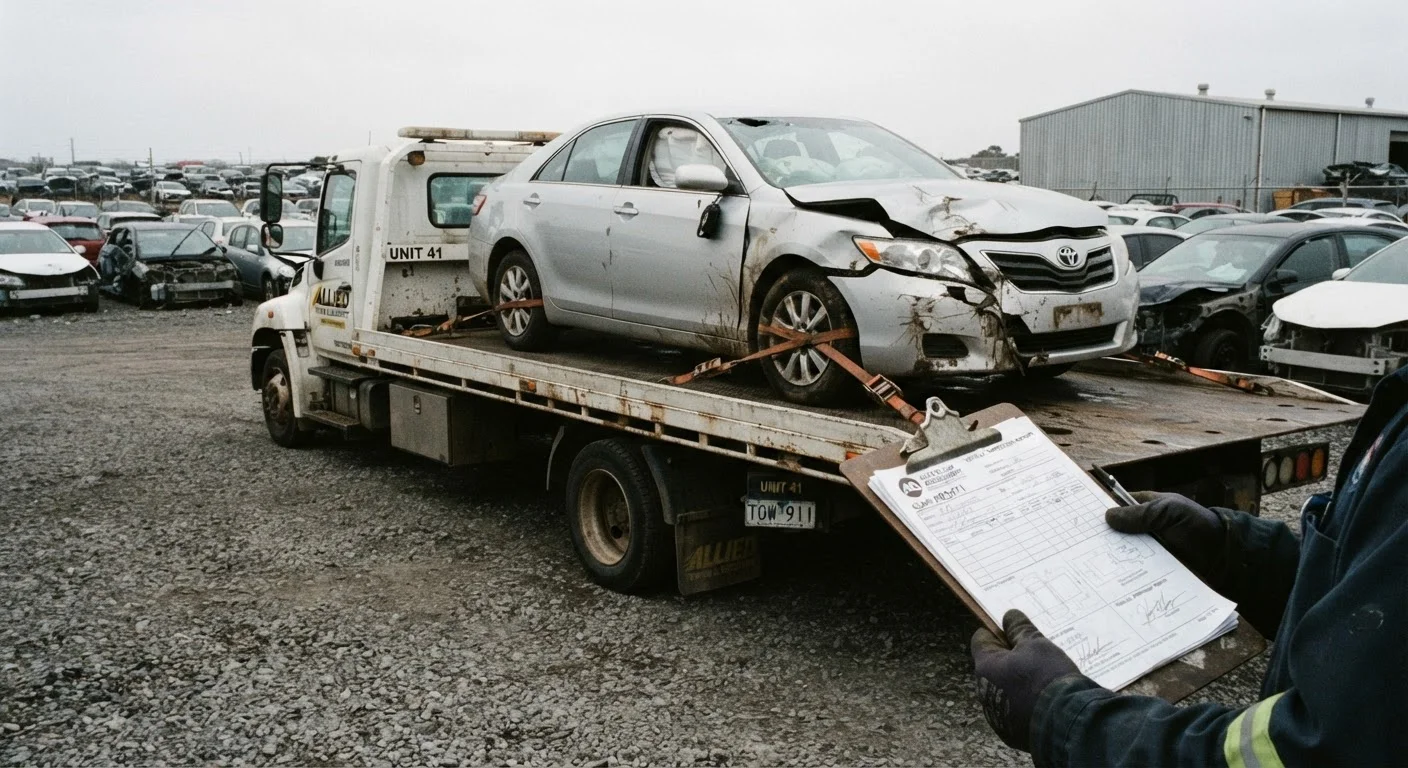
Photo: searchopenrecords editorial
—— In This Article
Key Takeaways
- A total loss declaration triggers a title brand that permanently attaches to the vehicle's VIN.
- The insurer typically takes possession of the vehicle and sells it through a salvage auction.
- Rebuilt or reconstructed titles are issued when a branded vehicle is repaired and re-inspected.
- Not all total loss vehicles reappear on public roads — some are parted out or crushed.
- A VIN history report can surface total loss events even when a title has been washed or obscured.
How a Total Loss Determination Is Made
When a vehicle sustains significant damage, the insurer assigns an adjuster to estimate repair costs and compare them against the vehicle's actual cash value (ACV) — what the vehicle was worth on the open market immediately before the loss. If repair costs meet or exceed the state's total loss threshold, the vehicle is declared a total loss.
Thresholds vary meaningfully by state. Some states set the threshold as low as 70% of ACV; others apply a 100% threshold. A few use a total loss formula that factors in salvage value alongside repair cost. Because these rules differ, a vehicle totaled in one state might not meet the threshold in another — a distinction that matters when interpreting records on a VIN history report.
Once the determination is made, the insurer pays the policyholder the ACV (minus any applicable deductible) and takes title to the vehicle. That transfer of ownership is the first step in a chain of public record entries. See our guide to accident records on vehicle history reports for how the underlying collision data is recorded separately from the total loss event itself.
The Title Branding Process
After acquiring the vehicle, the insurer surrenders the existing clean title to the state DMV and applies for a salvage title. This reissued title carries a damage brand — a notation permanently tied to the VIN indicating the vehicle's history. Common brands include salvage, junk, flood, fire, and parts only, depending on the damage type and the state's branding categories.
These brands feed into the National Motor Vehicle Title Information System (NMVTIS), a federally mandated database operated under the U.S. Department of Justice. Insurers, salvage yards, and state DMVs are required to report title and total loss data to NMVTIS, creating a national record that VIN history services draw from.
For a fuller breakdown of what each brand means after it's applied, the title brands decoded guide explains how each designation is defined and why it stays tied to the VIN permanently. You can also explore the broader VIN and title records hub for context on how title data connects to ownership and lien records.
Check the Title Brand Before the Listing Price
When evaluating any used vehicle, run the VIN before discussing price. A total loss entry or salvage brand fundamentally changes how you should assess value, insurability, and financing eligibility. Some lenders and insurers restrict or decline coverage on rebuilt-title vehicles, so knowing the title status early avoids surprises later in the purchase process.
What Happens to the Vehicle After the Write-Off
Most insurer-owned salvage vehicles are sold through salvage auctions, where buyers include auto recyclers, rebuild specialists, and — in some states — licensed individuals. From that point, the vehicle's path diverges:
- Parts and recycling: The vehicle is dismantled for reusable parts or crushed for scrap. No further title is issued.
- Rebuild and resale: A buyer repairs the vehicle, submits it for a state salvage inspection, and applies for a rebuilt or reconstructed title. Each state defines inspection requirements differently, and not all inspect with equal rigor.
- Export: Some salvage vehicles are exported, removing them from U.S. title tracking systems entirely.
When a rebuilt title is issued, the brand changes but the prior salvage record remains visible in NMVTIS-sourced history reports. That transparency matters: a vehicle with a rebuilt title has a documented prior total loss, which can affect insurance eligibility, resale value, and financing options. Environmental causes of total loss — such as flooding or hail — carry their own record trail; the environmental damage records article explains how those entries surface and how reliable they tend to be.
Reading Total Loss Entries on a VIN Report
A VIN history report may display a total loss event in several ways. You might see a direct total loss or insurance loss notation, a title brand change from clean to salvage, or both. The date of the insurance event and the date of the title brand may differ — sometimes by weeks — because reporting timelines between insurers, auctions, and state DMVs vary.
Key things to look for when reviewing these entries:
- Damage type: Is the cause listed (collision, flood, fire)? This shapes how you evaluate residual risk.
- Title sequence: Did a salvage title follow, and was it later upgraded to rebuilt? A gap or missing step in that sequence warrants scrutiny.
- State of record: Different states recorded the brand. Cross-referencing with NMVTIS-reporting services reduces the chance of missing a record that another state holds.
- Lien status: Total loss events sometimes leave unresolved liens if the payout didn't fully satisfy an outstanding loan. The open liens explainer covers how to identify and interpret those records.
Not every total loss vehicle that reappears for sale is misrepresented — many are legitimately rebuilt. But the presence of a total loss designation is a signal to gather more information, not to stop at the label alone. Our field guide to salvage, rebuilt, and clean titles walks through what each title status means for a vehicle's practical usability and insurability.
This article is for informational and educational purposes only. It does not constitute legal, financial, or insurance advice. Consult a qualified professional for guidance specific to your situation.
Frequently Asked Questions

Vin Search Editorial Team
VIN Search Editorial Team is the collective byline for our editorial team and contributor network. Articles published under this byline or an editorial pen name are researched, written, and reviewed according to our editorial standards for clarity, consistency, and independence before publication.
View author profile