
Model Year Codes in a VIN: Reading the 10th Character
The 10th VIN character encodes the vehicle's model year using a specific letter and number sequence. Learn the full coding chart here.
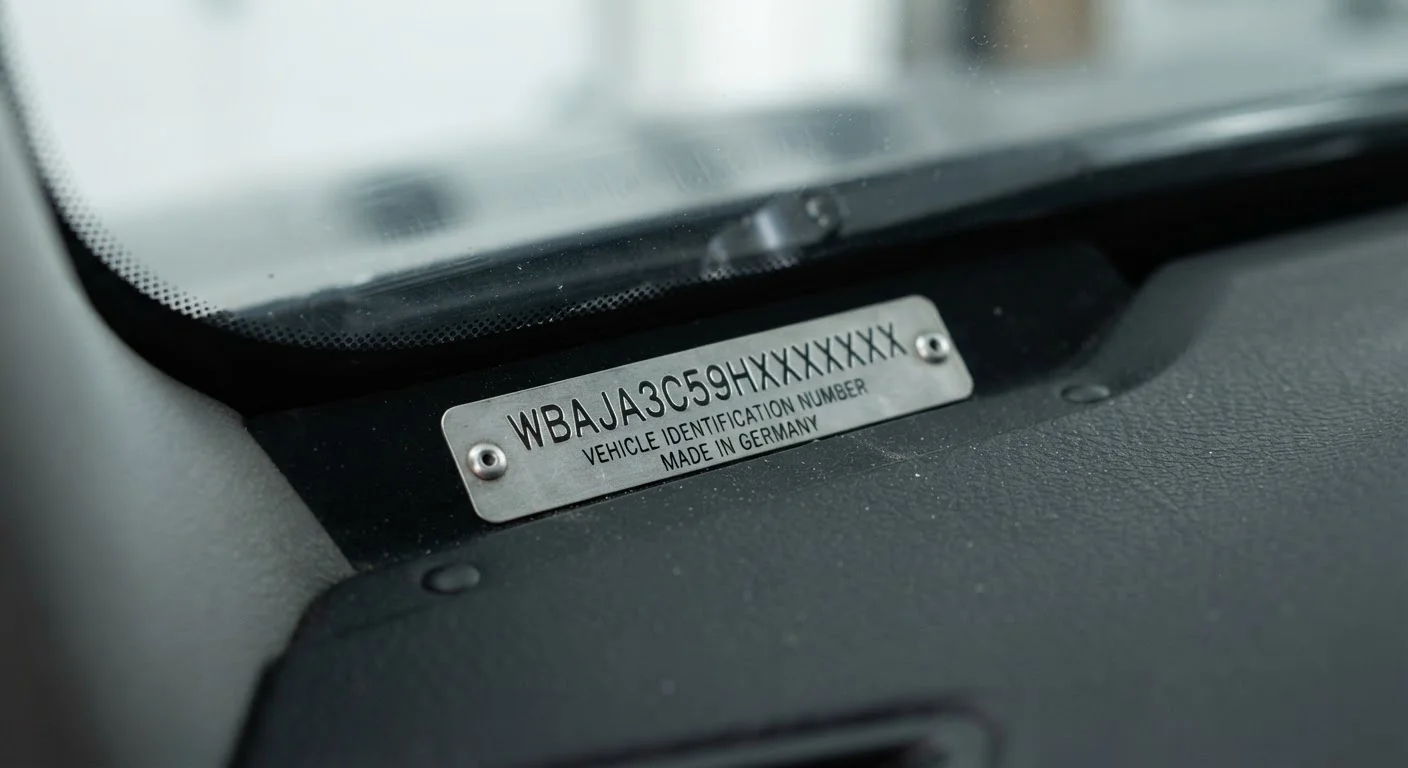
Photo: searchopenrecords editorial
—— In This Article
What the 10th Position Represents
A Vehicle Identification Number (VIN) is a 17-character string standardized by the National Highway Traffic Safety Administration (NHTSA) and the ISO 3779 specification. Every character position carries a defined meaning. The 10th character, specifically, encodes the model year of the vehicle — not the calendar year it was manufactured or sold, but the model year the manufacturer officially assigned to it.
Understanding this distinction matters. A vehicle built in August 2023, for example, may carry a 2024 model year designation, because manufacturers typically begin producing the next model year's vehicles in the second half of the prior calendar year. The 10th VIN character reflects the manufacturer's model year assignment, which is the same year used in federal safety recalls, emissions certifications, and title records.
For a broader introduction to how all 17 positions work together, see the position-by-position VIN guide. To understand the full purpose of a VIN itself, the overview of what a VIN actually is provides helpful context.
The Model Year Coding Chart
The NHTSA-standardized model year code uses a rotating sequence of letters and numbers. Critically, the letters I, O, Q, U, and Z are never used — they are excluded to avoid confusion with the digits 1, 0, and 2 when handwritten or printed in certain fonts. The sequence also skips the digit 0.
The chart below covers the full range currently in use for vehicles built under the modern 17-character VIN standard, which was federally mandated beginning with model year 1981:
| Code | Model Year | Code | Model Year |
|---|---|---|---|
| B | 1981 | Y | 2000 |
| C | 1982 | 1 | 2001 |
| D | 1983 | 2 | 2002 |
| E | 1984 | 3 | 2003 |
| F | 1985 | 4 | 2004 |
| G | 1986 | 5 | 2005 |
| H | 1987 | 6 | 2006 |
| J | 1988 | 7 | 2007 |
| K | 1989 | 8 | 2008 |
| L | 1990 | 9 | 2009 |
| M | 1991 | A | 2010 |
| N | 1992 | B | 2011 |
| P | 1993 | C | 2012 |
| R | 1994 | D | 2013 |
| S | 1995 | E | 2014 |
| T | 1996 | F | 2015 |
| V | 1997 | G | 2016 |
| W | 1998 | H | 2017 |
| X | 1999 | J | 2018 |
| K | 2019 | ||
| L | 2020 | ||
| M | 2021 | ||
| N | 2022 | ||
| P | 2023 | ||
| R | 2024 | ||
| S | 2025 |
The sequence repeats on a 30-year cycle. This means the letter B appeared first for 1981 and again for 2011. When reading an older VIN, use additional context — such as the vehicle's title record or the model designator in positions 4–8 — to distinguish between cycle repetitions. The VIN and title records hub explains how title documents can help confirm a vehicle's actual model year.
Model Year and Calendar Year Are Not Identical
Manufacturers are permitted to begin producing the next model year's vehicles as early as January 1 of the prior calendar year, though production most commonly shifts in summer or fall. A vehicle assembled in September 2024 could legitimately carry a 2025 model year designation. Always treat the 10th VIN character as the official model year reference, not the window sticker date or the year on the title application.
Why Model Year Accuracy Matters in Practice
The model year encoded in position 10 is not merely administrative. It connects directly to federal safety recall databases, emissions compliance certifications, and state DMV title records. When a recall is issued, it is tied to specific model years — not build dates or calendar years. If the 10th character of your VIN is misread or misrecorded, a recall lookup may return inaccurate results, potentially leaving a safety defect undetected.
Model year also affects insurance rating, parts compatibility, and resale valuation. A VIN that shows a different model year than what a seller claims on a listing is a discrepancy worth investigating before any transaction. You can cross-reference the 10th character against the title document and any available vehicle history report. Learn more about what history reports can surface in the vehicle history reports section, or see how a VIN unlocks a car's past for a broader decoding walkthrough.
For comparison, note that the 9th character — the check digit — serves an entirely different purpose: it is a mathematically calculated value used to detect fraudulent or incorrectly formatted VINs. That mechanism is explained in the check digit explainer. The first three characters, by contrast, identify the manufacturer and assembly country — a separate function covered in the World Manufacturer Identifier article.
This article provides general educational information about VIN structure. Always verify vehicle details through official title records and your state's DMV before making purchase or registration decisions.

Vin Search Editorial Team
VIN Search Editorial Team is the collective byline for our editorial team and contributor network. Articles published under this byline or an editorial pen name are researched, written, and reviewed according to our editorial standards for clarity, consistency, and independence before publication.
View author profile