
World Manufacturer Identifier: How the First Three VIN Characters Name a Vehicle's Origin
The first three characters of a VIN form the World Manufacturer Identifier. Learn how they reveal who built a vehicle and where.
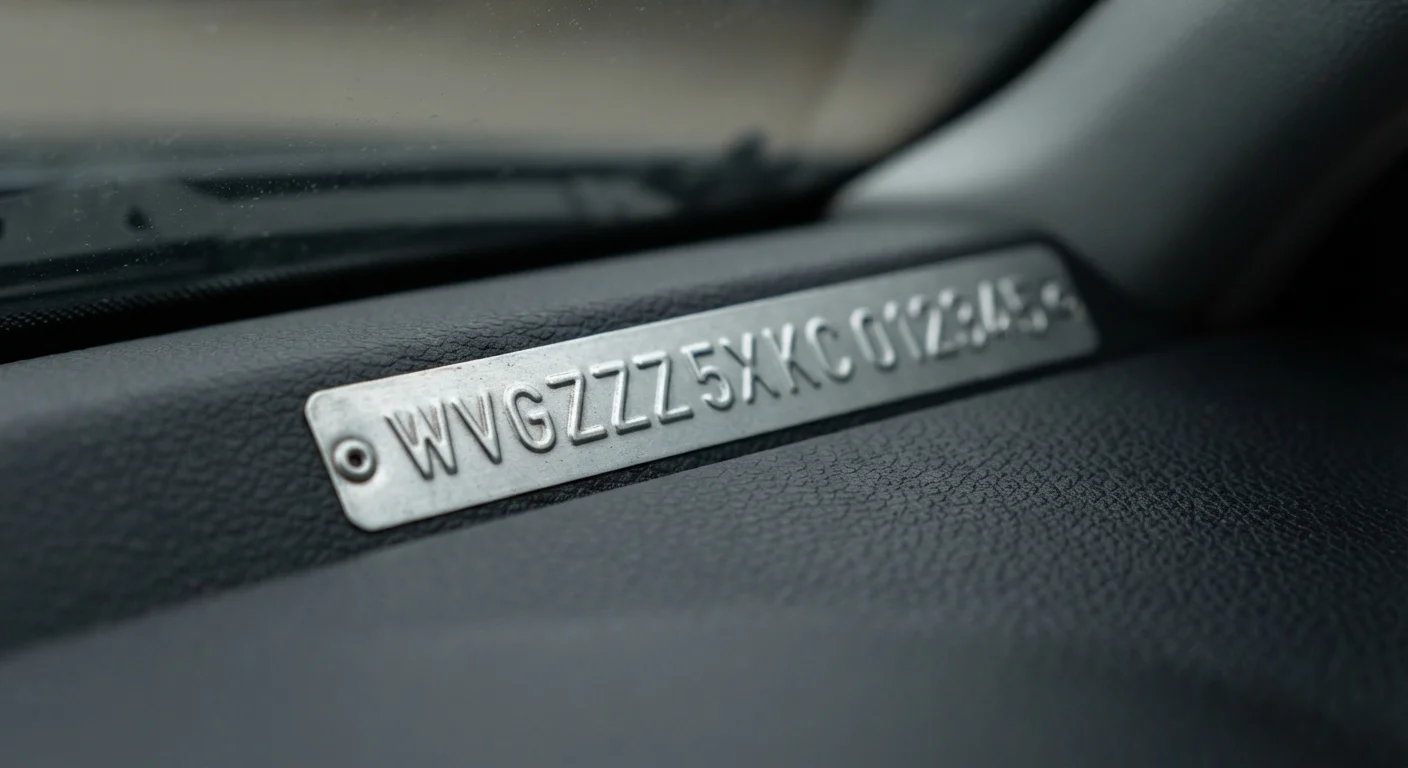
Photo: searchopenrecords editorial
—— In This Article
Key Takeaways
- The WMI occupies positions 1–3 of every standardized 17-character VIN.
- The first character indicates the world region where the vehicle was assembled.
- The second character narrows the location to a specific country within that region.
- The third character identifies the manufacturer or, in some cases, a vehicle division.
- SAE International assigns WMI codes; the standard is governed globally by ISO 3780.
- Manufacturers producing fewer than 500 units annually use a '9' in position three, with positions 12–14 also encoding the manufacturer.
How the WMI Fits Inside the Full VIN Structure
A VIN (Vehicle Identification Number) is a 17-character alphanumeric code that uniquely identifies every motor vehicle built for sale in the United States and most global markets since 1981. As explained in our overview of what a VIN actually is, the code is divided into three logical sections. The WMI is the first of those sections, occupying characters 1, 2, and 3.
Characters 4 through 9 form the Vehicle Descriptor Section (VDS), which encodes make, model, body style, restraint systems, and engine type. Characters 10 through 17 make up the Vehicle Identifier Section (VIS), which includes the model year, assembly plant, and unique serial number. The WMI therefore acts as the opening clause — it establishes who built the vehicle and where before any other details are recorded.
For a complete, position-by-position breakdown of all 17 characters, see our VIN decoded reference guide.
Decoding Each of the Three WMI Characters
Each character in the WMI carries a distinct, standardized meaning under ISO 3780.
Character 1 — World Region
The first character encodes the broad geographic region of manufacture using a letter or digit assigned by the ISO standard. The recognized region codes include:
- A–H: Africa
- J–R: Asia (J specifically denotes Japan)
- S–Z: Europe
- 1–5: North America
- 6–7: Oceania
- 8–9: South America
For example, any VIN beginning with 1, 2, 3, 4, or 5 was assembled somewhere in North America. A VIN starting with J was assembled in Japan.
Character 2 — Country of Manufacture
The second character narrows the location to a specific country within the region identified by character 1. Within the North America block, for instance, 1 as a second character typically indicates the United States, while 2 indicates Canada and 3 indicates Mexico. Combined with the first character, these two letters or digits pinpoint the nation of assembly with precision.
Character 3 — Manufacturer or Vehicle Type
The third character identifies the specific manufacturer — or, in some systems, the division of a manufacturer responsible for the vehicle. When combined with characters 1 and 2, this produces a unique three-character code assigned exclusively to that manufacturer for that country. Low-volume manufacturers (those building fewer than 500 vehicles per year) receive a 9 in this position, with characters 12–14 carrying the full manufacturer identification instead.
1981
Year standardized 17-character VINs were mandated in the US
The National Highway Traffic Safety Administration (NHTSA) required all passenger cars sold in the US to carry a standardized 17-character VIN beginning with model year 1981.
3
Characters that form the World Manufacturer Identifier
Under ISO 3780, the WMI always occupies exactly the first three positions of any compliant 17-character VIN, regardless of where the vehicle was manufactured.
500+
Annual units required for a standard WMI assignment
Manufacturers producing 500 or more vehicles per year receive a unique three-character WMI; those below this threshold use a '9' in position three and extend their identifier into positions 12–14.
Why the WMI Matters in Practice
Understanding the WMI helps vehicle owners, buyers, and researchers in several concrete ways.
Verifying assembly origin: The WMI lets you confirm whether a vehicle described as "American-made" was actually assembled in the United States, or whether it was assembled abroad and imported. This distinction matters for consumers, fleet managers, and compliance purposes, though it should not be confused with domestic content percentage, which is a separate measure.
Spotting inconsistencies in listings: If a seller claims a vehicle is a certain make or origin and the WMI disagrees, that is a flag worth investigating further. Combined with a full VIN lookup, this can surface potential title discrepancies or vehicle misrepresentation.
Connecting to title and registration records: The WMI feeds directly into the public title records system. State DMVs use the full VIN — anchored by the WMI — to match vehicles to their ownership history. See our guide to VIN and title records for more on how that connection works.
If you are new to using VINs and want to understand what a full lookup can reveal, our first-time VIN lookup guide walks through the process step by step.
Common Misconceptions About the WMI
Two misunderstandings come up frequently when people encounter WMI information for the first time.
Misconception 1: The WMI identifies the brand, not the plant. In practice, the WMI identifies the manufacturer and country of assembly — but a single automotive group may own multiple brands, each with separate WMI codes. Conversely, the same brand may assemble vehicles in multiple countries, resulting in different WMIs for different models in its lineup. The WMI follows the manufacturing location, not the brand logo on the grille.
Misconception 2: A foreign WMI means the vehicle is "foreign." Many vehicles sold by US-headquartered automakers carry non-US WMI codes because they are assembled in Canada, Mexico, or other countries. The reverse is equally true: vehicles assembled at US plants by foreign-owned manufacturers carry North American WMI codes. The WMI is a geography-of-assembly marker, not a proxy for corporate nationality.
For context on how the WMI compares to other vehicle identifiers, our comparison of VINs and license plates explains what each type of identifier can and cannot reveal.
The WMI is just one layer of the information encoded in a VIN. Other positions — such as the 10th character, which encodes model year — carry equally specific meaning. See our article on reading the model year character in a VIN to continue building your decoding skills.
Frequently Asked Questions

Vin Search Editorial Team
VIN Search Editorial Team is the collective byline for our editorial team and contributor network. Articles published under this byline or an editorial pen name are researched, written, and reviewed according to our editorial standards for clarity, consistency, and independence before publication.
View author profile