
State-to-State Title Transfers: How Records Follow the VIN
Moving a vehicle across state lines triggers a new title record. Learn how states share VIN data and where gaps in the trail can appear.
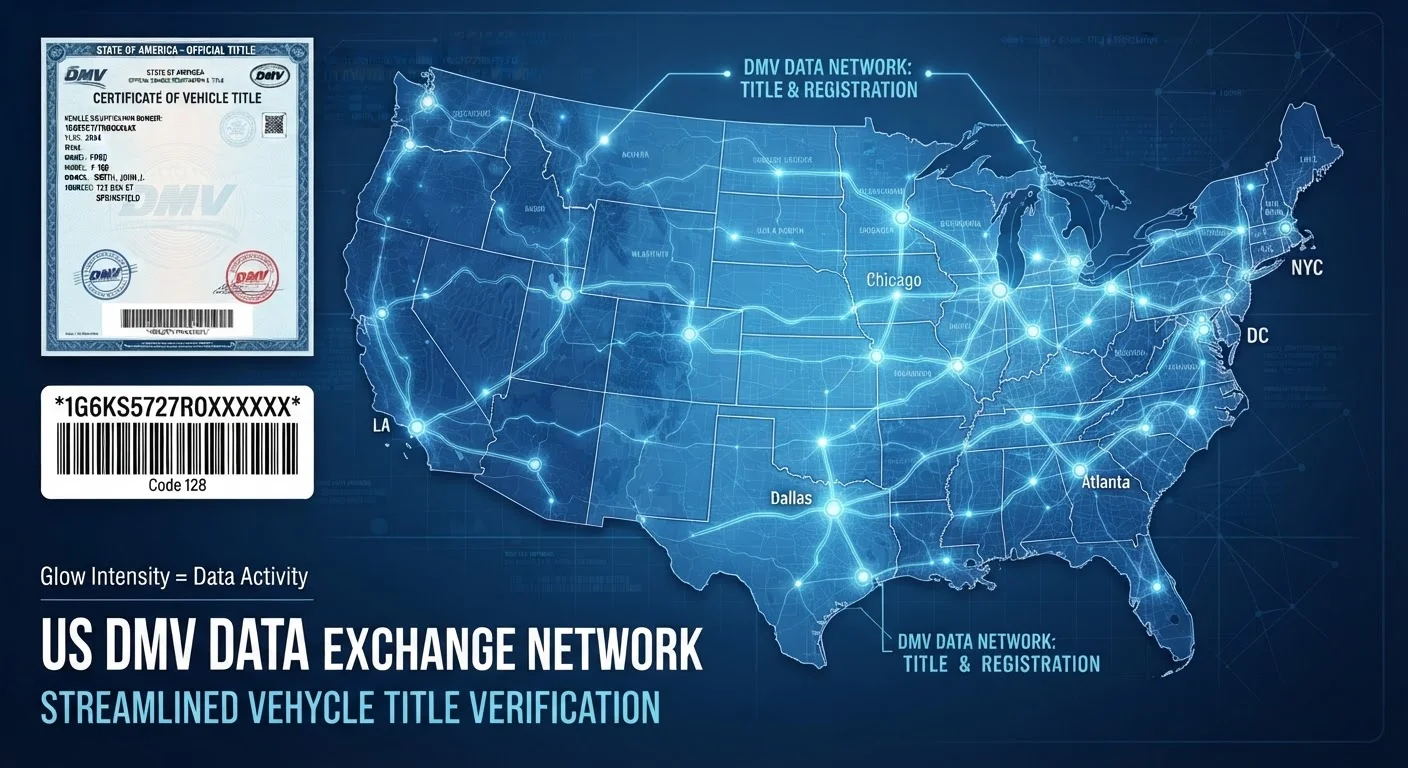
Photo: searchopenrecords editorial
—— In This Article
Key Takeaways
- Each US state issues its own vehicle title; there is no single national title record.
- The VIN is the universal identifier that links a vehicle's history across different state records.
- NMVTIS and AAMVAnet allow states to share title and brand data, but coverage is not always complete.
- Gaps in the title trail can appear when states lag in reporting or a vehicle moves rapidly between jurisdictions.
- Reviewing a VIN-based history report can help surface out-of-state title brands before a purchase.
- A clean-looking local title does not automatically mean the vehicle has a clean history in every state.
Why Each State Holds Its Own Title Record
Vehicle titling in the United States is governed at the state level, not federally. When you register a car in California, that state's DMV issues the title and holds the ownership record. If you later move to Texas and retitle the vehicle, Texas creates an entirely new title document — without automatically inheriting every detail from California's record.
The VIN is what holds this fragmented system together. Established under NHTSA (National Highway Traffic Safety Administration) standards, every vehicle's 17-character VIN is permanently assigned at manufacture and never reused. It becomes the shared key across every state's database, allowing records from different jurisdictions to be associated with the same physical vehicle.
To understand the full record trail a title generates from the start, see our overview of the public record trail behind a vehicle title.
How States Share Title Data: NMVTIS and AAMVAnet
Two primary data-sharing systems facilitate communication between state DMVs. The first is NMVTIS (National Motor Vehicle Title Information System), a federally authorized database managed under the authority of the US Department of Justice. Federal law requires states, insurance carriers, and salvage yards to report title and brand information to NMVTIS. The system's core purpose is to flag vehicles that carry brands — such as salvage, flood, junk, or odometer rollback — even when those brands originated in a different state.
The second system is AAMVAnet, operated by the American Association of Motor Vehicle Administrators. This network allows state DMVs to query each other's records in near real time, helping clerks verify whether an incoming vehicle already carries an active lien or a problematic brand before issuing a clean local title.
50+
Separate state titling authorities in the US
Every US state plus the District of Columbia maintains its own independent vehicle title system, contributing to a fragmented national record landscape.
~80%
States actively reporting to NMVTIS
AAMVA and DOJ data have historically shown that a significant majority of states participate in NMVTIS reporting, though submission frequency and completeness vary.
30–90 days
Typical window to retitle after moving states
Most state DMVs require new residents to obtain a local vehicle title and registration within this window, though exact deadlines differ by jurisdiction.
Despite these systems, coverage is not uniform. Not every state reports to NMVTIS on the same schedule, and historical records predating a state's full participation may be absent. That is why understanding where VIN data comes from matters when evaluating a vehicle history report.
Where Gaps in the Record Trail Appear
The most significant gap risk in cross-state titling is a practice known as title washing. This occurs when a vehicle bearing a damaging brand — say, a salvage title issued after a flood — is transported to a state whose DMV does not recognize or carry over that specific brand during the re-titling process. The result: a new, seemingly clean title that conceals the vehicle's prior damage history.
Gaps also arise from timing. A seller may transfer a vehicle before the originating state has reported the latest title event to NMVTIS. A buyer checking a VIN report during that window would see an incomplete picture. Rapid multi-state transfers compound this: a vehicle titled in three states within a single year can outpace reporting cycles.
Private sales introduce additional complexity, since not all states require a formal title transfer filing at the point of sale. For a closer look at how private transactions affect the record, see what happens to the title record when a car is sold privately.
Practical Steps for Buyers and Sellers Crossing State Lines
Whether you are buying a vehicle from another state or preparing to sell one before relocating, the following steps help ensure the record trail is as complete as possible.
- Run a VIN history report before any transaction. Reports drawing from NMVTIS-connected sources can reveal out-of-state brands, previous title states, and odometer readings across jurisdictions. For a full walkthrough of what these reports cover, visit our complete guide to VIN and title records.
- Request the physical title document. Compare the VIN on the title to the VIN plate on the vehicle's dashboard and door jamb. Any mismatch is a serious red flag.
- Check for active liens. A state-to-state transfer does not automatically release a lien recorded in another state. Confirm lien status before completing the transfer.
- Verify brand history explicitly. Ask the seller to disclose all prior state titles and confirm that the vehicle has never carried a salvage, flood, or rebuilt brand in any jurisdiction.
- Understand your receiving state's requirements. Some states conduct a physical VIN inspection before issuing a new title; others may require a smog or safety check. Contact your local DMV to confirm the exact process.
For a structured pre-transfer checklist, see verifying a VIN before an ownership transfer. And if you want to understand how to follow the chain of ownership events already recorded, tracing an ownership transfer through public records offers a step-by-step approach.
Frequently Asked Questions

Vin Search Editorial Team
VIN Search Editorial Team is the collective byline for our editorial team and contributor network. Articles published under this byline or an editorial pen name are researched, written, and reviewed according to our editorial standards for clarity, consistency, and independence before publication.
View author profile